

There's an App for that: Wildlife ID in Normandy
I don't know about you but as well as discovering the history and culture of anywhere I am holiday I also like to get out in the countryside or along the coast and see what new plants and animals I can find. If you are the same then do read on to see how we can help with this whilst you are on holiday at Eco-Gites of Lénault.
Maps
There is no need to pay out on expensive maps for your holiday as we have a wide selection you can borrow (unless, of course, you like to collect them). They are at various scales for walks (as well as cycle rides or longer trips out in the car) and we also have a selection of booklets with local walks and cycle routes. Many of these start at our gate but if you want to head further afield the local tourist offices will have more routes or find them online.
Apps
Once you've picked your route, donned your walking boots and packed a snack and water how are you going to know what wildlife along your route? We can lend you some ID books but now I tend to use various apps that are really generally very accurate. Plus this way you only have to carry a phone, not a whole bag of books (more rooms for snacks in that case).
Birds - Merlin Bird ID
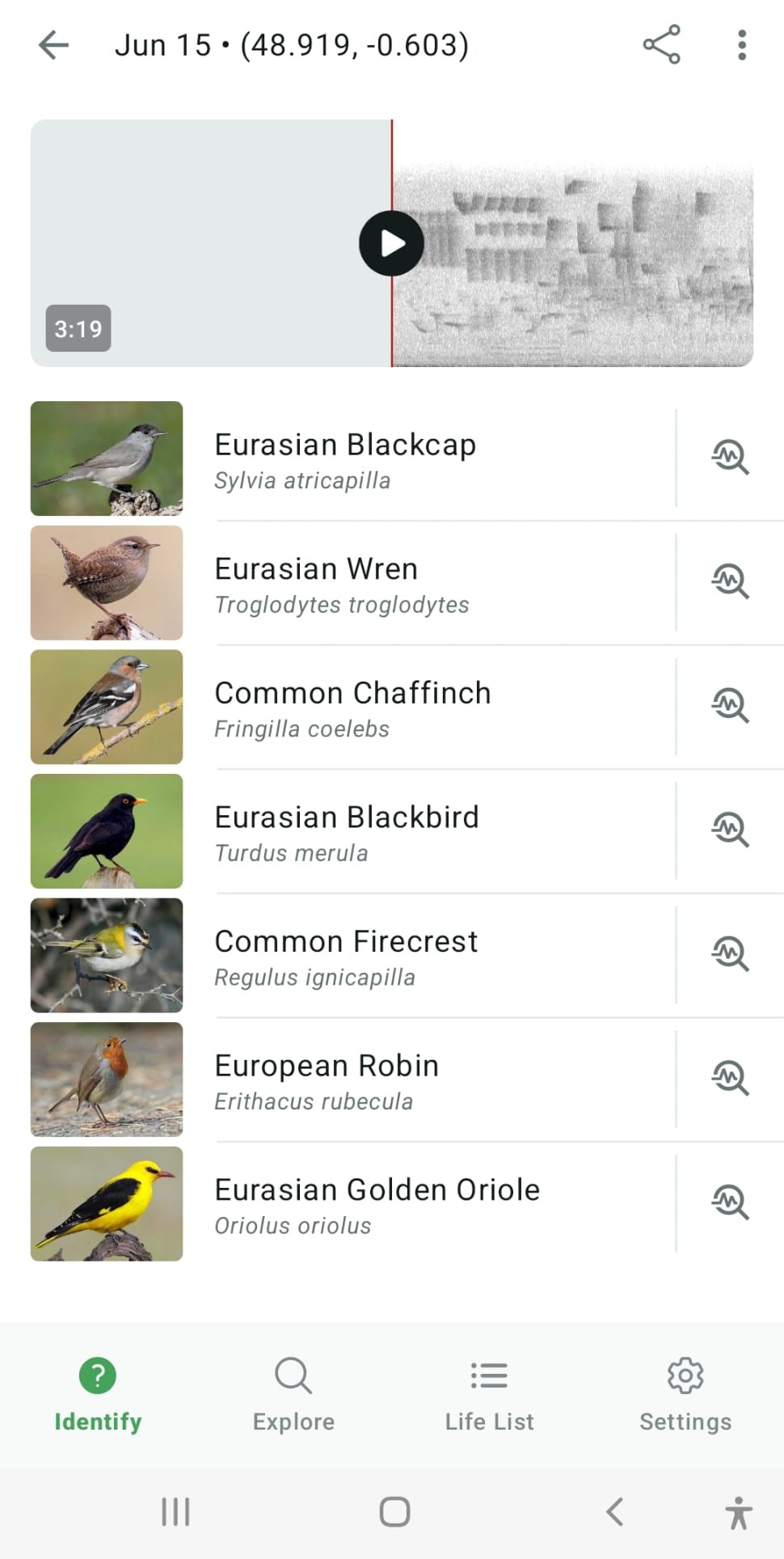
Merlin has been created by Cornell Lab of Ornithology and can identify birds by their song, a description or by a photo and it works offline once installed on your phone. I generally use it to identify birds from their songs and have found that I can now identify so many more birds that are hiding out of sight but singing away. For Eco-Gites of Lénault set your region to Western Europe and make sure you switch on your phone's location, although you can do this manually as well. Recordings can be saved and you can create a life list of birds found.
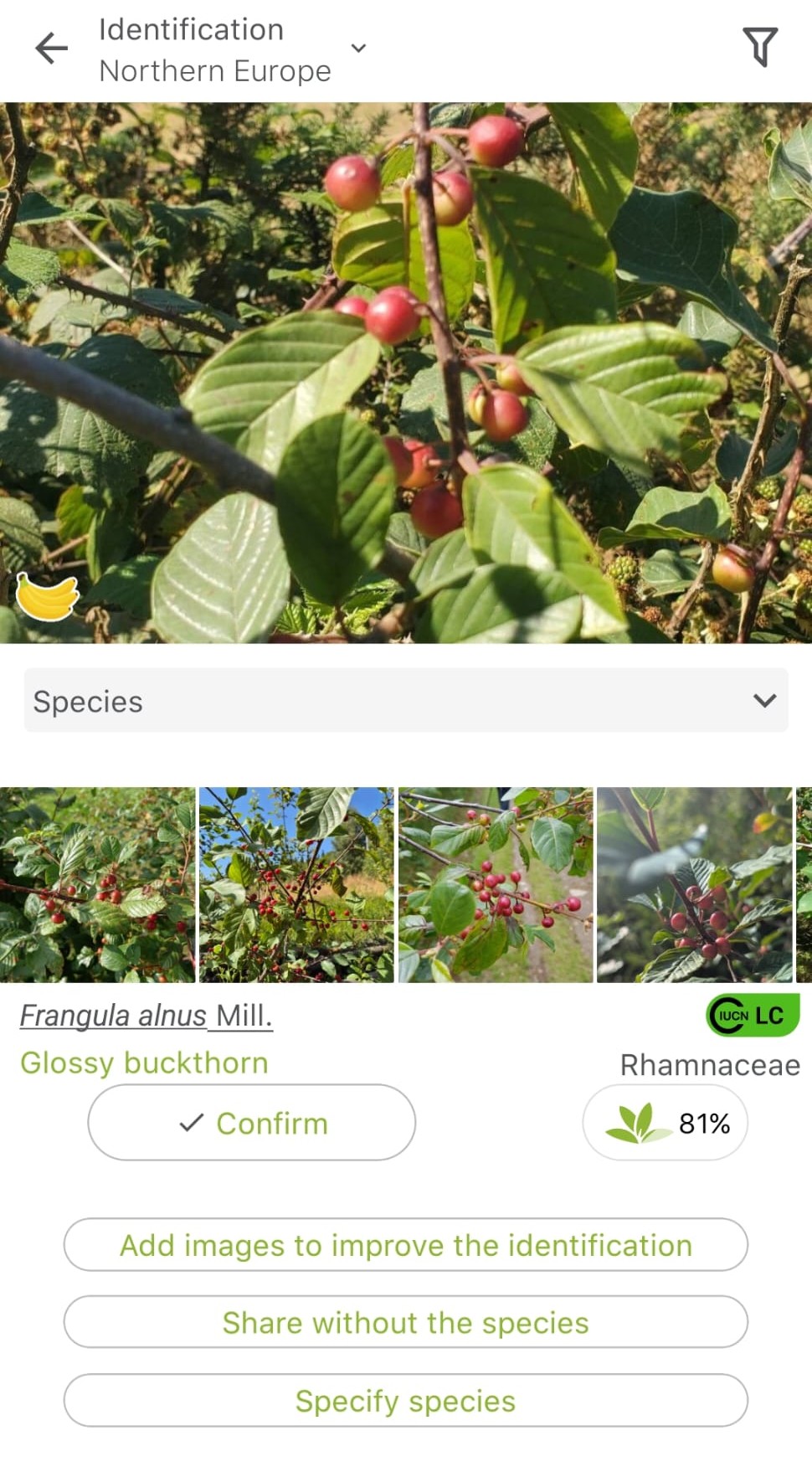
Plants - Pl@ntNet
There are numerous plant ID apps but this one consistently gets recommended as the best and I agree. Take one or more pictures of the plant you want to identify and it will give you species options, stating the percentage likelihood of it being correct. It gives the most frequently used common name, its Latin name and a list of other local common names. Furthermore by saving your finds they will be used as part of a citizen science project on plant biodiversity. On this one set your region to Northern Europe.
Everything else - iNaturalist:
"Identify plants, animals, fungi and more while adding to a living atlas of life on Earth."
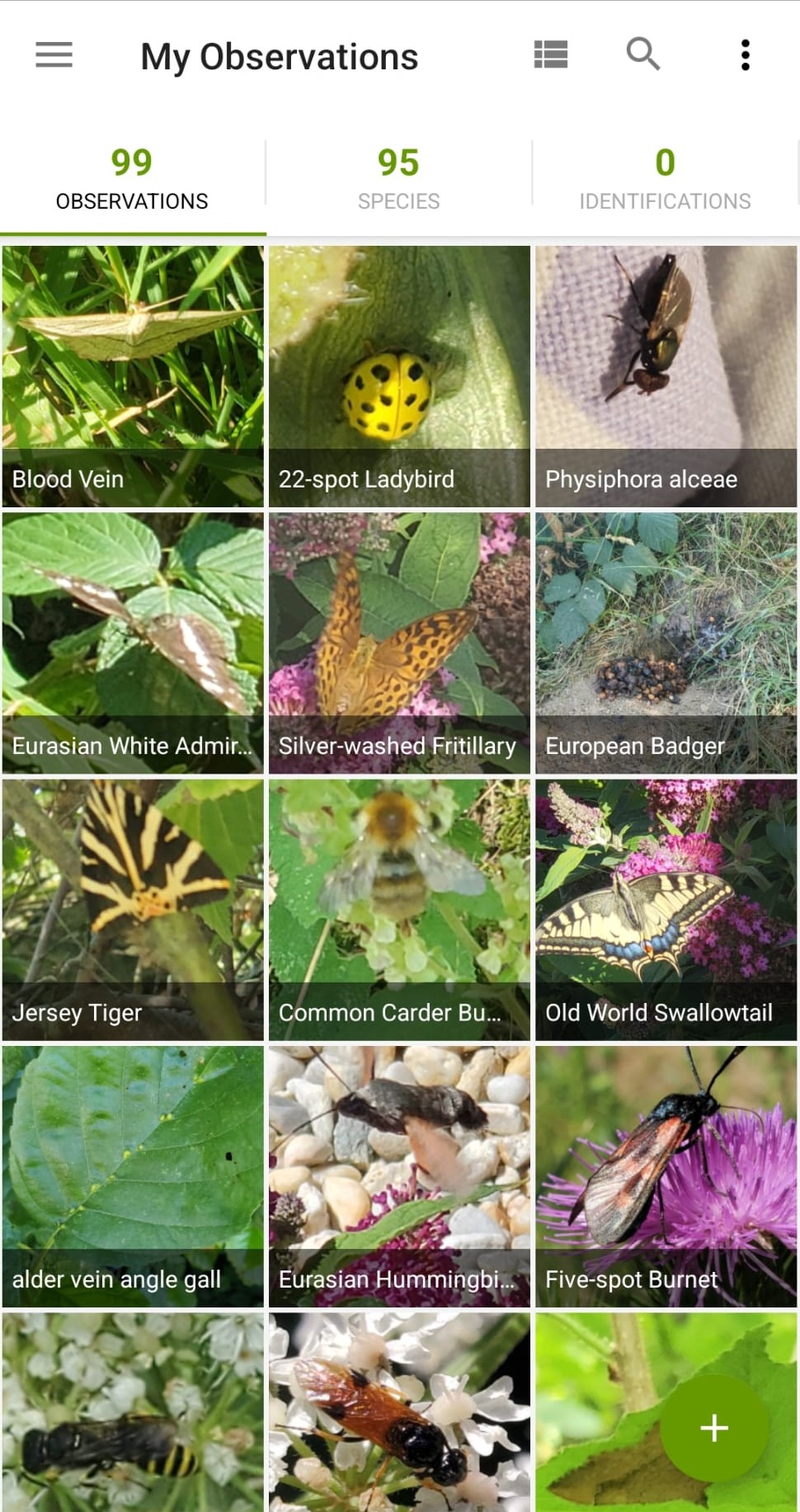
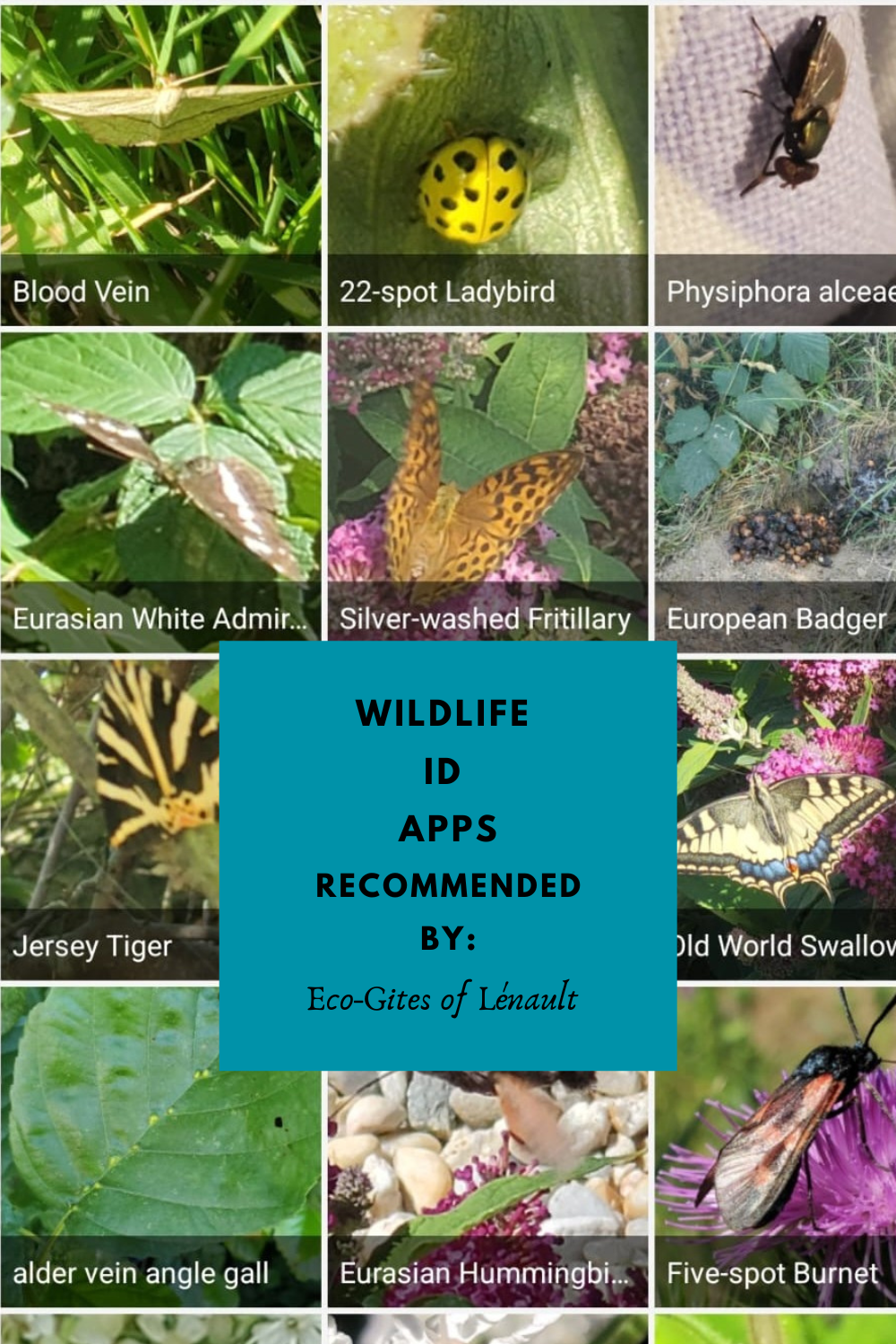
This app allows you to identify any plant, animal or fungus and if you are save your find to the app and include enough information about it, then it can be used for research purposes as part of another citizen's project. And you don't just need to see something alive as the app will identify species from traces they leave such as poop (scat) nests, calls/songs, tracks etc. So far I have mostly used iNaturalist to help identify insects and other invertebrates but my account also records a harvest mouse nest, a badger latrine, a juvenile adder, a spiny toad and various leaf galls.
These apps are free and available in your phone's app store and by using Pl@ntNet and iNaturalist you will be helping record the world's biodiversity. It is worth noting, though, that no app is completely accurate. Sometimes Merlin likes to keep me on my toes such as when it told me one of my chickens was a Whooper Swan and I have no idea what bird it thought it heard when it told me there was a Greater Flamingo nearby!
Whilst these 3 apps are all for wildlife ID I would also recommend one more. With so many paths around Eco-Gites of Lénault you could get lost but if you use a tracking app, not only can you see how far you have walked, you can also use the map on the app to find out where you are. I use Sports Tracker but there are plenty of others to choose from, some free, others on a subscription.
Do you have a favourite Wildlife ID app?
You can pin me ...
Comments
I love using the Merlin app. Being somewhat hard of hearing, I can't hear all the songs. But I love putting on the app, seeing the birds register and then look out for them. I can listen to the recording back home. I've used the plant app but not the wildlife one. Will download it later. Thanks for the info. Rosie.
Due